Why You Sweat More When You're Fitter, Not Less
Quick Answer: Trained people sweat earlier, more heavily, and with more dilute sweat than untrained people at the same workload. This is a documented heat-acclimation adaptation — the body becomes better at dumping heat, so it starts cooling sooner and more aggressively. Sweating more at the same effort means your thermoregulation improved, not that your fitness declined.
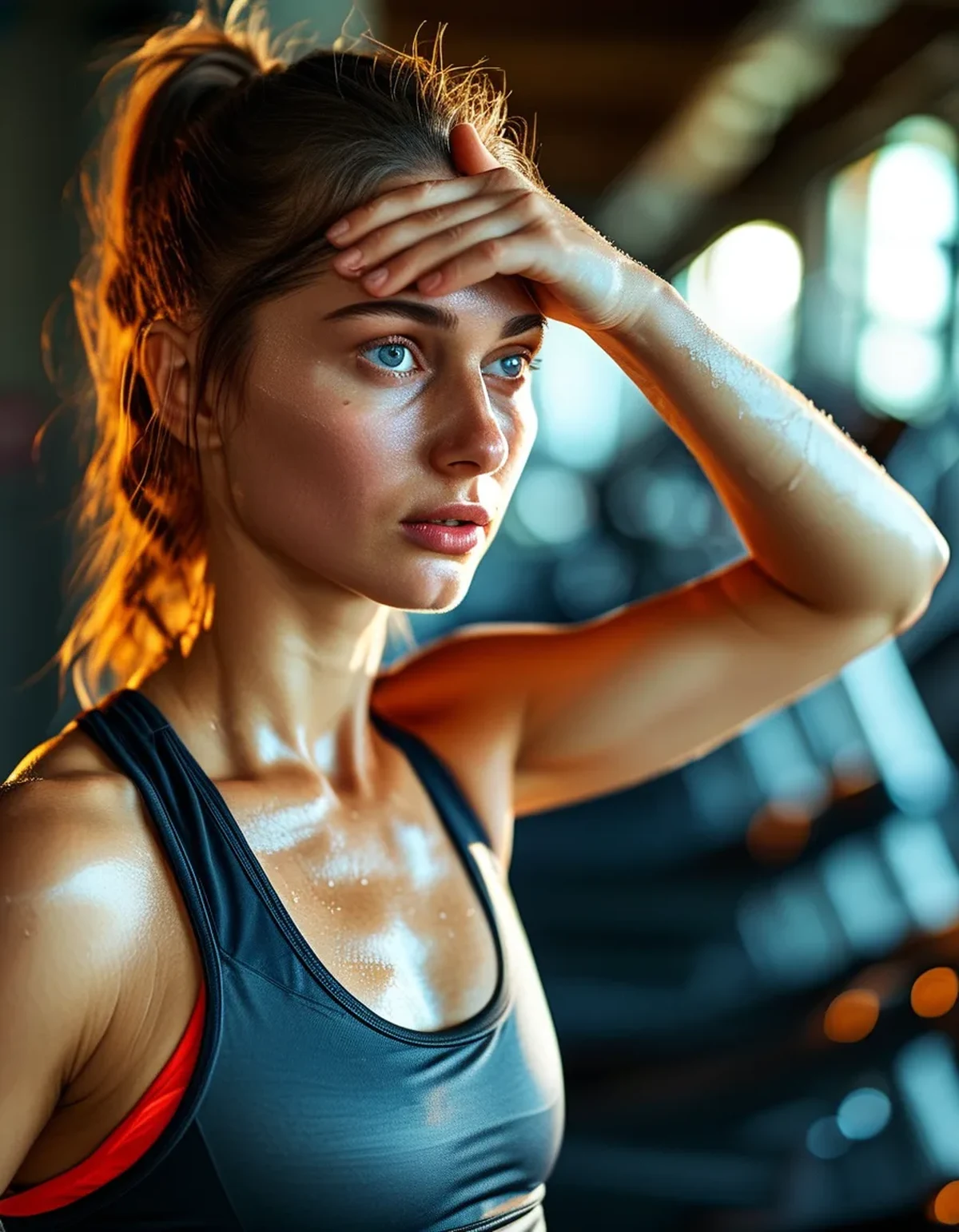
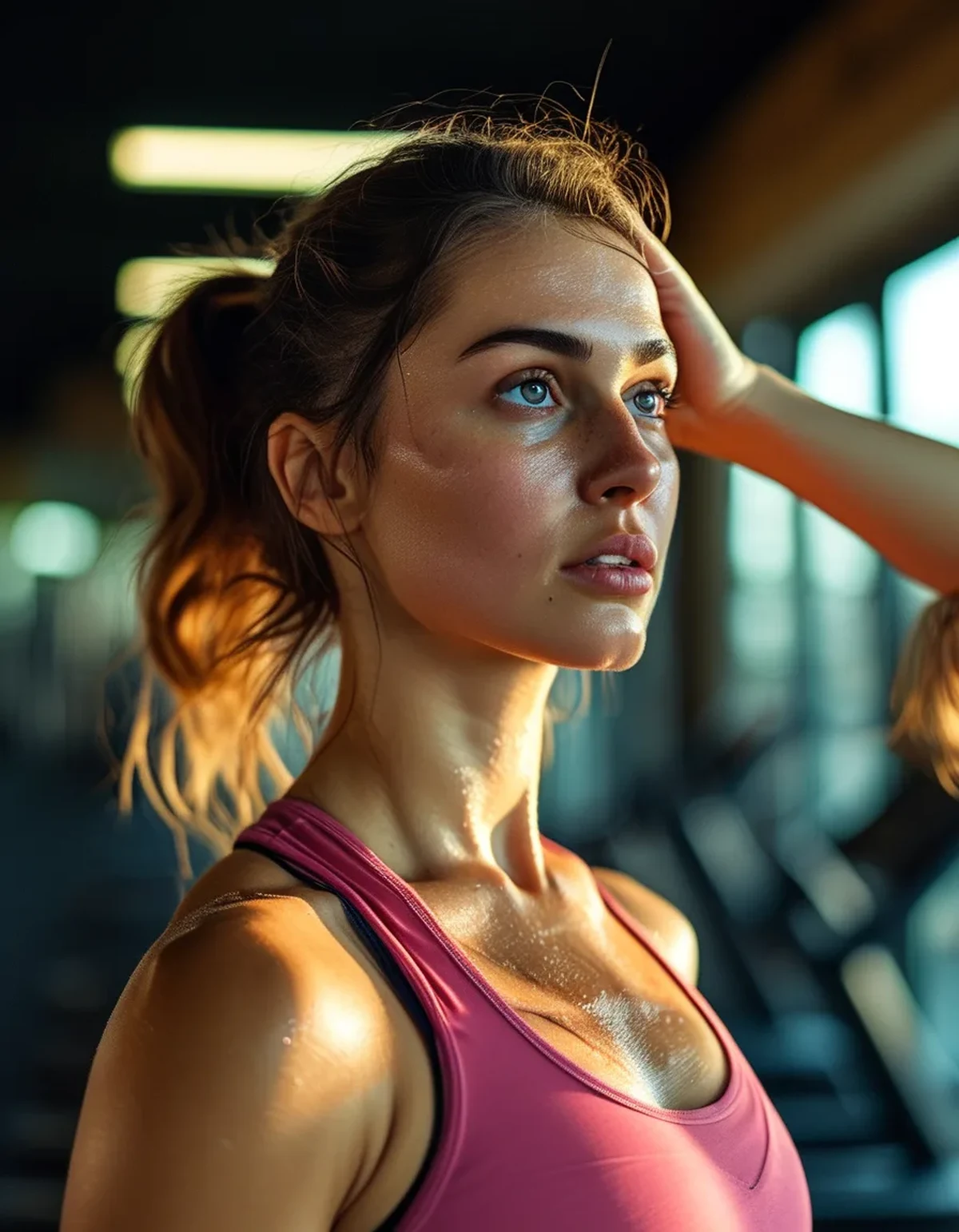
Six months in, you’re dripping ten minutes into a session that used to take twenty to get you warm. It feels like the wrong direction. It’s the opposite.
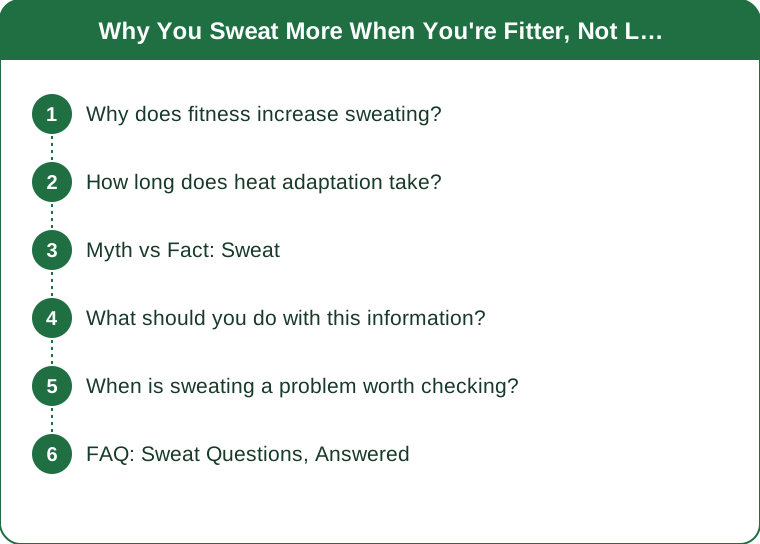
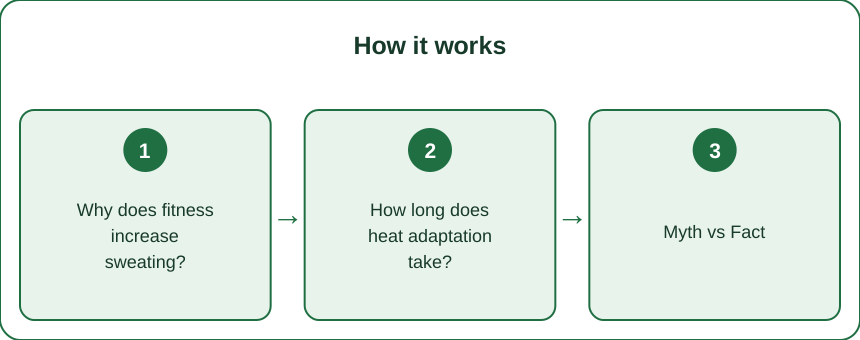
Why does fitness increase sweating?
Because sweating is a cooling system, and training improves the system rather than reducing the need for it.
Three specific adaptations occur:
Earlier onset. Trained individuals begin sweating at a lower core temperature threshold. The body doesn’t wait as long before starting to cool, which keeps core temperature under better control throughout.
Higher sweat rate. Sweat gland output increases, and the capacity to sustain high rates improves. Trained athletes can produce substantially more sweat per hour than untrained individuals.
More dilute sweat. This is the most interesting one. Heat-acclimated people reabsorb more sodium in the sweat duct before the sweat reaches the skin, conserving electrolytes. Sweat becomes less salty — which is why the white salt marks on clothing often decrease even as sweat volume increases.
The purpose of all three: exercise generates heat, and heat has to leave. Evaporative cooling is the primary mechanism in humans. A better cooling system lets you maintain higher workloads for longer before heat becomes the limiting factor.
So the correct reading of “I sweat more now” is “my body got better at dumping heat.”
How long does heat adaptation take?
Faster than most training adaptations, and it also fades faster.
The bulk of heat acclimation occurs within 7 to 14 days of repeated heat exposure with exercise. Plasma volume expansion happens first, within the first few days. Sweat rate and sodium conservation changes follow over the following week or two.
It decays in a similar timeframe. A week or two away from heat exposure and much of the adaptation is lost. This is why the first hot week of summer is difficult every year even for well-trained people, and why a fit person who trains exclusively in air conditioning struggles outdoors.
General aerobic fitness produces partial heat adaptation even without deliberate heat exposure, because training raises core temperature regularly. But specific heat acclimation requires actually being hot.
Practical protocol if you’re preparing for a hot event: 60 to 90 minutes of moderate exercise in the heat, daily or near-daily, for 10 to 14 days before. The effect is substantial — heat acclimation is one of the larger performance interventions available for hot-weather events.
This is general information, not medical advice. Heat training carries real risks; build up gradually and stop if you feel unwell.
Myth vs Fact: Sweat
Myth: Sweating more means you’re burning more calories. Fact: Sweat rate reflects heat load and thermoregulatory efficiency, not energy expenditure. You’ll sweat more in a hot room at the same workload without burning meaningfully more. Hot yoga’s sweat volume is not a calorie measurement.
Myth: Sweat is how your body removes toxins. Fact: Sweat is over 99 percent water with small amounts of electrolytes, urea, and trace compounds. Detoxification is handled by the liver and kidneys. Trace amounts of various substances appear in sweat, but the quantities are not physiologically meaningful for elimination.
Myth: Not sweating much means you’re unfit. Fact: Individual variation is large and genetically influenced. Some people sweat little and thermoregulate fine. Notably reduced sweating relative to your own baseline, especially with heat symptoms, is a medical concern rather than a fitness one.
Myth: You should replace sweat losses with water alone. Fact: For sessions over about 60 to 90 minutes, or in significant heat, sodium replacement matters. Large water-only intake with heavy sweat losses can dilute blood sodium, which in extreme cases is dangerous.
Myth: Sweating during weight training means it was a good session. Fact: Sweat during resistance work is driven largely by rest interval length and room temperature. Short rests raise heat load; long rests let you cool. Neither predicts training quality.
Myth: Weight lost during a workout is fat. Fact: It’s almost entirely water. It returns on rehydration, and the amount lost tells you about sweat rate rather than anything about body composition.
What should you do with this information?
Two things, and the first is measurable.
Calculate your sweat rate. Weigh yourself, unclothed and dry, before and after a one-hour session. Add the weight of fluid consumed. The difference gives you your hourly sweat rate. Every kilogram lost is roughly a liter of sweat.
This is genuinely useful because sweat rates vary enormously between individuals — from under half a liter to over two liters per hour under similar conditions. Generic hydration advice is useless without knowing which end you’re at.
Then hydrate to your actual rate. Aim to limit body mass loss during exercise to under about 2 percent, which is where performance begins to measurably decline. For most sessions under an hour, water is fine. Beyond that, or in heat, add sodium.
Check whether you’re a salty sweater. Visible white marks on clothing and skin after drying suggests higher sodium concentration in your sweat. Salty sweaters benefit more from electrolyte replacement and are more prone to cramping.
And stop using sweat as a workout quality metric. It measures heat load and thermoregulatory capacity. A cool-room session with less sweat can be the harder training stimulus, and a hot-room session with dramatic sweat can be easy work in a hot room.
When is sweating a problem worth checking?
There are a few patterns that warrant attention rather than reassurance.
Sudden cessation of sweating during exercise in heat, accompanied by hot dry skin, confusion, or dizziness, is a medical emergency — this is the presentation of heat stroke and it requires immediate cooling and emergency care.
Excessive sweating unrelated to heat or exertion — soaking through clothing at rest, sweating that interferes with daily activities — is hyperhidrosis, and it’s treatable. It’s worth raising with a doctor rather than managing indefinitely.
A significant change in your own pattern without a corresponding change in fitness, weight, medication, or environment is worth mentioning at a check-up. Thyroid conditions, hormonal changes, and some medications all affect sweating.
Night sweats that are drenching and persistent are a distinct symptom and should be evaluated.
For everything else — sweating more as you get fitter, sweating heavily in a hot room, sweating more than the person next to you — the variation is normal and largely genetic.
The broader point: sweat is a well-designed cooling system, and getting better at using it is what adaptation looks like. The frustration of dripping ten minutes into a session is understandable, and it’s also the receipt for six months of work.
This is general information, not medical advice. Seek prompt care for symptoms of heat illness, and consult a healthcare professional about persistent changes in sweating.
FAQ: Sweat Questions, Answered
Why do I sweat more from my head than elsewhere?
Sweat gland density varies across the body, and the forehead and scalp are among the highest-density regions. Regional distribution is largely individual and doesn’t indicate anything about fitness.
Does sweating help you cool down faster after a workout?
Sweat cools through evaporation, so it only works when it can evaporate. Sweat that drips off provides no cooling. This is why humidity makes heat so much harder to manage — evaporation slows, so the same sweat volume delivers far less cooling.
Should I use antiperspirant before exercise?
It’s fine and doesn’t meaningfully impair whole-body cooling, since underarms represent a small fraction of total sweat capacity. Applying at night rather than in the morning is more effective for most formulations, since the active ingredients need time to form plugs in the ducts.
TL;DR:
- Trained bodies sweat earlier, more, and with less sodium — all signs of improved cooling.
- Heat acclimation develops in 7–14 days and fades in about the same time.
- Sweat volume measures heat load, not calories, effort, or workout quality.
- Weigh yourself before and after a session to learn your actual hourly sweat rate.
Dripping ten minutes in isn’t a sign you’ve lost fitness. It’s your thermoregulatory system starting work sooner — which is exactly what six months of training was supposed to build.
Keep Reading
This article is for general informational and styling purposes only. Fit, sizing, and product availability may vary.