Why You Still Sweat Heavily in a Cold Gym and What It Actually Means
Quick Answer: Sweat rate is driven primarily by internal heat production, not by air temperature. Hard exercise produces the same metabolic heat regardless of the room, and your body’s core temperature threshold for sweating doesn’t move much. Cold air actually makes sweating less effective at cooling you, because you’re also wearing more clothing that traps it.
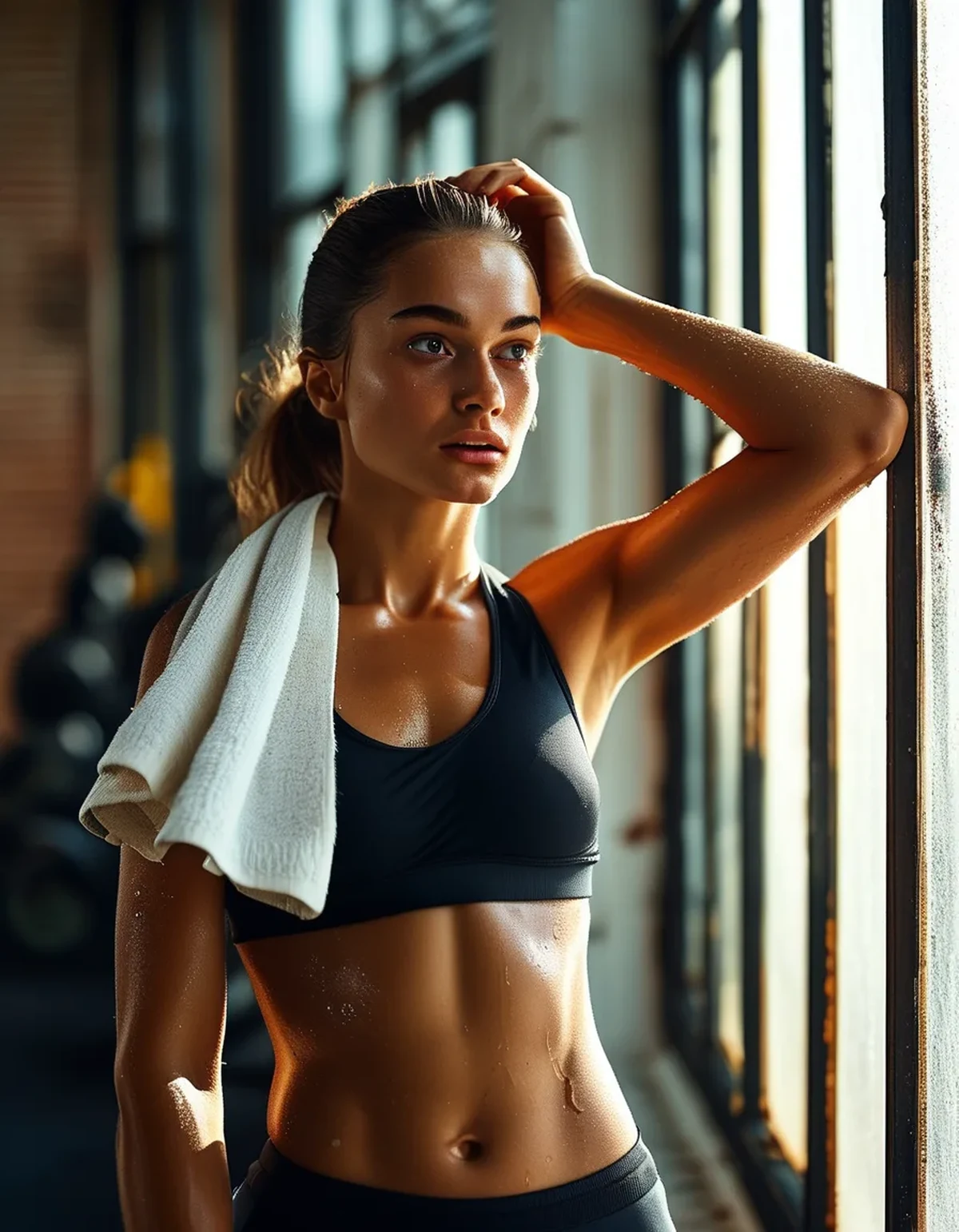
It catches people out every autumn. The gym is genuinely cold, you’re wearing more than you did in July, and twenty minutes in you’re sweating harder than you ever did in summer. Nothing is wrong.
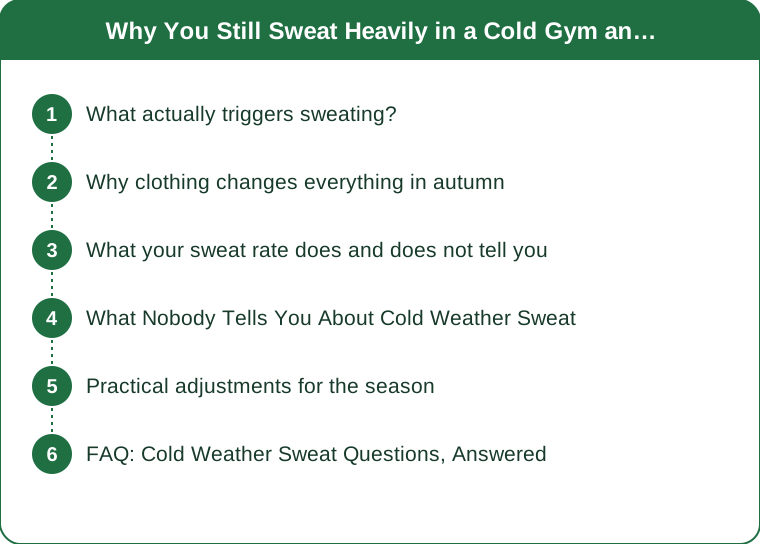
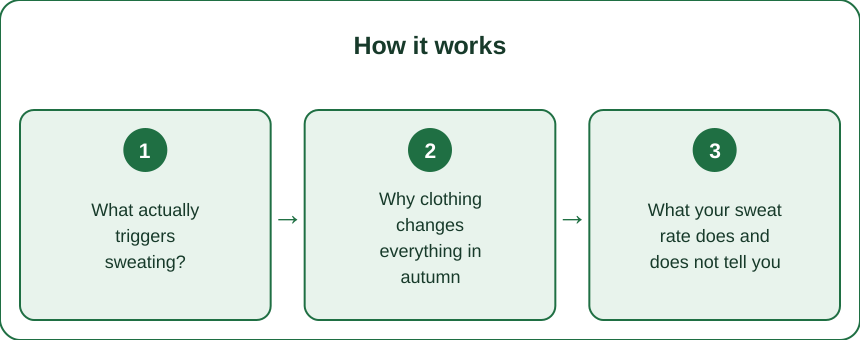
What actually triggers sweating?
Core temperature crossing a threshold, with skin temperature as a modifier.
Working muscle is remarkably inefficient at converting chemical energy into movement. Something like 75 to 80 percent of the energy you produce during exercise comes out as heat rather than motion. That heat has to go somewhere, and evaporation of sweat is the primary mechanism once you’re working hard.
Core temperature rises during exercise regardless of ambient conditions, because the heat is being generated internally. When it crosses roughly 37.2 to 37.5 degrees, the hypothalamus initiates sweating.
Ambient temperature affects how fast heat leaves your body through the other routes, radiation, convection, and conduction. A cold room helps with those. But it doesn’t change how much heat you’re producing, and if you’re producing a lot, sweating starts regardless.
Skin temperature does modulate the response somewhat, so you’ll typically sweat a little less in a cold room at the same intensity. The effect is smaller than people expect, and it’s easily overwhelmed by the clothing variable.
Why clothing changes everything in autumn
This is where the autumn paradox comes from, and it’s largely a clothing problem rather than a physiology one.
Evaporation only cools you if the sweat evaporates from your skin into moving air. Sweat that soaks into a layer of clothing and stays there has done almost nothing for you thermally, and it’s now sitting against your skin as a wet layer.
In summer you wore one thin layer, ideally something that moves moisture outward, in moving air. Evaporation was efficient and a given amount of sweat produced a lot of cooling.
In autumn you’re wearing two or three layers, often including something warm and absorbent, in still indoor air. The same sweat produces much less cooling, so your body produces more of it trying to reach the same result.
The result is that many people sweat more in autumn than in summer at the same workload, which feels backwards and is entirely predictable. The fix is layers you can actually remove and a base layer that moves moisture rather than holding it, which is a clothing purchase rather than a fitness intervention.
What your sweat rate does and does not tell you
It does not indicate fitness. Fitter people actually tend to start sweating sooner and sweat more, because trained thermoregulatory systems are more responsive. Heavy sweating is not a sign of poor conditioning.
It does not indicate how hard you worked. Sweat rate correlates with heat production and heat dissipation conditions, both of which vary. A hot yoga class produces more sweat than a heavy squat session and far less mechanical work.
It does not indicate fat loss. Sweat is water and electrolytes. The weight change on a scale after a session is fluid, and it returns when you drink.
It does tell you about your fluid needs, and this is the genuinely useful signal. Weighing yourself before and after a session, with the same clothing state, gives a reasonable estimate of fluid lost. Every kilogram lost is roughly a litre of fluid.
It does tell you about acclimatisation. As you adapt to a set of conditions, you tend to sweat earlier, more efficiently, and with lower electrolyte concentration. That’s an adaptation, and it’s why the first sessions of a season feel disproportionately hard.
What Nobody Tells You About Cold Weather Sweat
The dangerous part of autumn training is not the sweating, it’s what happens after. Wet clothing in cold air conducts heat away from you extremely efficiently, far faster than dry clothing does. The post-session chill that people brush off is a real thermoregulatory event, and it’s why changing out of a wet base layer immediately matters more in October than in July.
Second: people drink far less in cold weather, and thirst sensation is genuinely blunted by cold. Studies on cold-weather exercise consistently find reduced voluntary fluid intake alongside sweat rates that are often not much lower than in warm conditions. Dehydration in autumn training is common and under-recognised because it doesn’t feel like a hot day.
Third: cold air is dry air, and you lose additional fluid through respiration. Breathing hard in cold dry air adds a meaningful amount to total fluid loss that nobody counts, and it’s part of why the mouth feels dry on a cold run.
Fourth, and this is the one that surprises people: sweat composition changes with acclimatisation, and losing heat acclimatisation over autumn means your sweat becomes saltier again. If you notice salt marks on clothing in October that weren’t there in August, that’s de-acclimatisation rather than anything concerning.
Practical adjustments for the season
Layer to remove, not to endure. The single most useful change. A base plus a mid layer you can take off after ten minutes beats one warm top.
Buy the base layer, not the warm top. A thin technical base that moves moisture away is the piece that actually determines comfort. A thick absorbent layer next to skin is the common mistake.
Drink on a schedule rather than on thirst. Thirst is unreliable in cold conditions. Something like 150 to 250 millilitres every 15 to 20 minutes during a hard session is a reasonable default for most people, adjusted for size and intensity.
Change immediately after. Wet clothing in cold air is the actual risk, and a dry top in the bag is the cheapest solution available.
Weigh before and after once, to know your actual sweat rate in autumn conditions. Most people are surprised, and it turns fluid intake from guesswork into a number.
Don’t chase sweat as a metric. If your gauge of a good session is how wet your shirt is, autumn will make you train badly. Use load, reps, pace, or heart rate instead. This is general information, not medical advice.
FAQ: Cold Weather Sweat Questions, Answered
Should I sweat less in a cold gym?
Slightly, at the same intensity. If you’re sweating more, it’s almost always because clothing is preventing evaporation, so your body compensates by producing more.
Do I need electrolytes in autumn?
For sessions under an hour, generally no, water is fine. For longer or very heavy-sweating sessions, or if you see heavy salt residue on clothing, they become more relevant.
Is night sweating after evening training normal?
Core temperature stays elevated for a while after hard exercise, and it can affect sleep. Training earlier, or cooling down properly and showering, usually resolves it. Persistent unexplained night sweats are worth mentioning to a doctor.
TL;DR:
- Sweating is driven by internal heat production, not room temperature, and hard work produces the same heat in any season.
- Extra layers trap sweat so it can’t evaporate, so your body makes more of it. Autumn sweating can exceed summer sweating.
- Sweat rate says nothing about fitness or fat loss; it does tell you your fluid needs.
- Thirst is blunted in cold weather, so drink on a schedule, and change out of wet layers immediately after.
The cold gym isn’t malfunctioning and neither are you. It’s a clothing and hydration problem wearing a physiology problem’s clothes.
Keep Reading
This article is for general informational and styling purposes only. Fit, sizing, and product availability may vary.