Why You Sweat More in the First Cool Week, Not Less
Quick Answer: Summer training makes you sweat earlier and more heavily, which is exactly what acclimatisation is for. Those adaptations persist for one to two weeks after the weather cools, so the first cool sessions run a summer-tuned cooling system in autumn conditions. You get more sweat, faster cooling, and a higher risk of getting cold - not a sign of lost fitness.
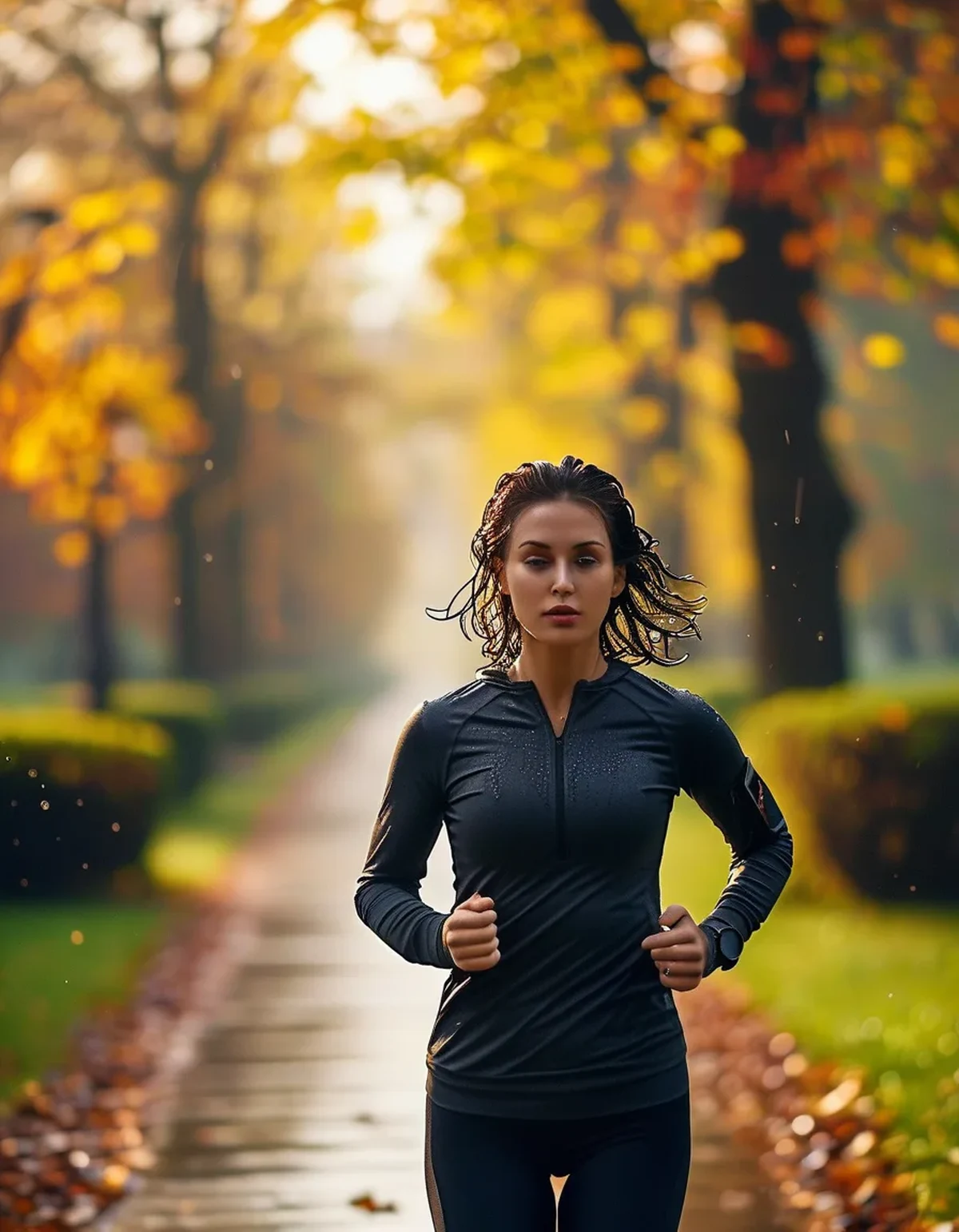
First genuinely cool morning of the season. You dressed for it, went out expecting an easier run, and came back with a base layer you could wring out.
It seems backwards, and it is one of the more reliable things the body does. You spent the summer becoming very good at cooling yourself down, and that skill does not switch off the moment the weather does.
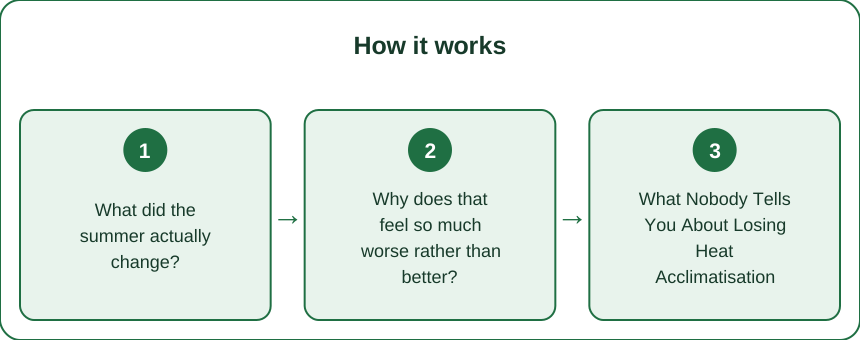
What did the summer actually change?
Three measurable things, all of which make you a more effective sweater.
You start sweating sooner. Heat acclimatisation lowers the core temperature threshold at which sweating begins, so a heat-adapted person begins cooling earlier in a session than an unadapted one. That is a large part of why the same run feels easier in August than it did in June.
You sweat more in total. Sweat rate increases substantially with acclimatisation, sometimes by a third or more over a couple of weeks of consistent heat exposure.
Your sweat gets more dilute. The body becomes better at reabsorbing sodium before the sweat reaches the surface, which conserves electrolytes. This is why sweat tastes less salty by the end of a hot summer and why the white marks on a cap fade.
Alongside those, plasma volume expands, which improves cardiac efficiency and is a genuine performance benefit.
All of this is tuned for hot conditions and none of it reverses immediately. The adaptations decay over roughly one to two weeks without heat exposure, faster for some than others. So the first cool week is spent with a cooling system calibrated for 90F operating at 60F, and the result is exactly what you would predict: more sweat than the conditions require.
Why does that feel so much worse rather than better?
Because the sweat is no longer doing the job it was produced for, and it starts costing you instead.
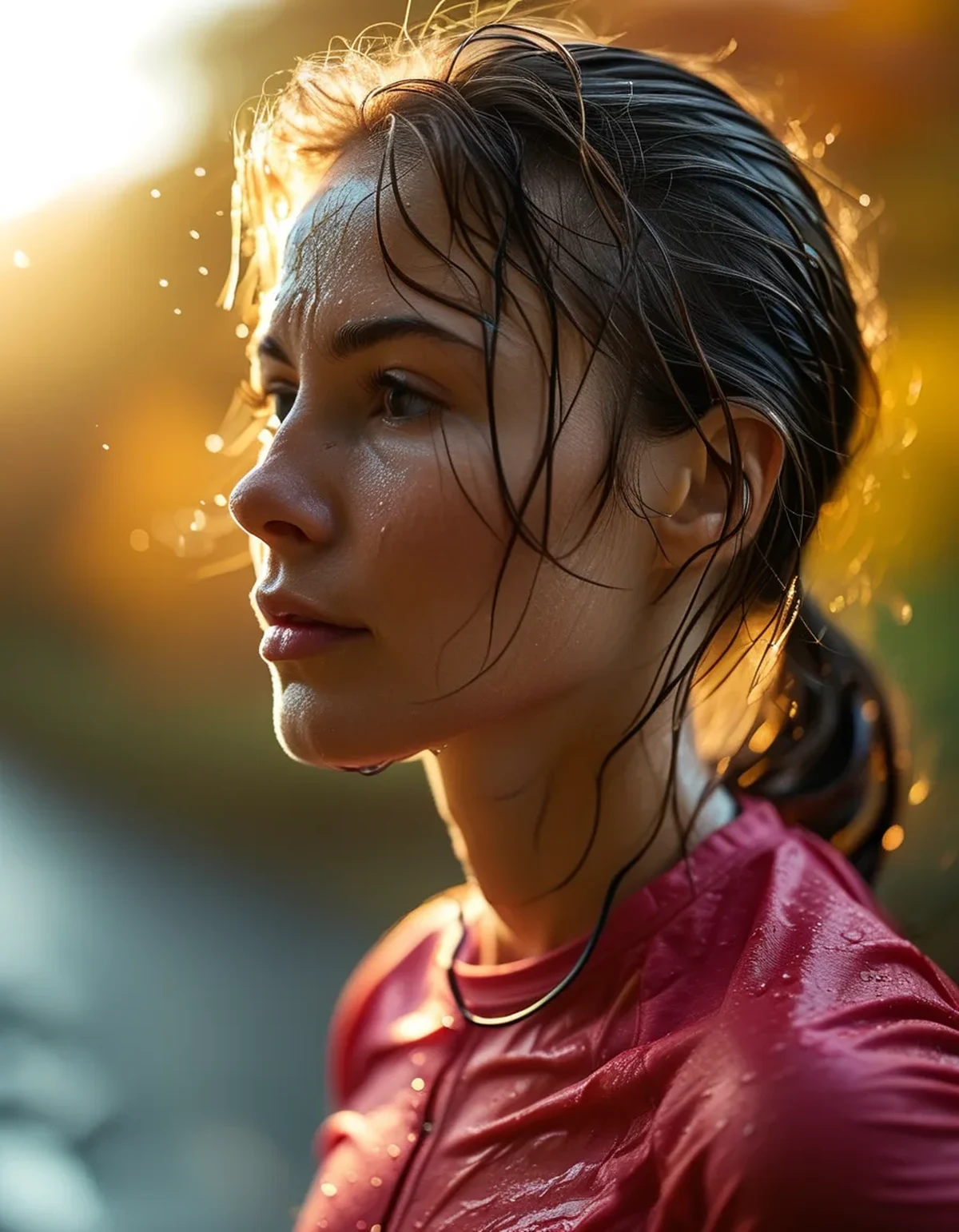
In hot weather, sweat evaporates fast and the cooling is efficient. In cool humid autumn air, evaporation slows, so the sweat sits in the fabric. You get the fluid loss without the full cooling benefit, and you end up carrying wet kit.
Then you stop, and the same wet kit becomes the problem. Evaporation continues while your heat production drops away, which is why the walk home in autumn is so much colder than the temperature suggests. The over-production of sweat in the first cool week is precisely what makes those first post-session chills so sharp.
There is a perception element too. In summer you expected to be soaked, so it registered as normal. In autumn you expected to be comfortable, so the same amount of sweat registers as excessive and often gets read as being unfit or unwell.
And humidity plays a bigger role than people credit. Autumn mornings are frequently at or near saturation, and sweat cannot evaporate into air that is already full. A 60F morning at 95 percent humidity is a genuinely poor cooling environment despite the pleasant number on the forecast.
What Nobody Tells You About Losing Heat Acclimatisation
It decays faster than it builds. Acclimatisation takes ten to fourteen days of consistent exposure to develop and starts fading within a few days of stopping. The asymmetry is why a week’s holiday in a cool climate mid-summer noticeably changes how the first hot session back feels.
Fitter people keep it longer. Well-trained people acclimatise faster and hold the adaptations longer, partly because their sessions produce enough internal heat to provide a stimulus even in cool weather. If your sweat response seems to stay high well into October, that is a reasonable sign rather than a problem.
Sodium losses go back up. As acclimatisation fades, sweat becomes saltier again. People who dialled in a low-electrolyte approach over the summer sometimes find cramping returns in autumn, and the cause is a change in sweat composition rather than in hydration.
The thirst signal weakens in the cold. Cold exposure blunts thirst substantially, which combines badly with a still-elevated sweat rate. Autumn dehydration is common and is almost never noticed, because nobody expects to be dehydrated when they are not hot.
And this is why the first cold race of the season so often goes badly. People overdress for the start line, sweat heavily into their kit in the first two miles at a summer-tuned rate, and then spend the rest of the race cold and wet. Experienced racers dress to be slightly cold at the start for exactly this reason.
What should you actually do for the next two weeks?
Manage the transition rather than fighting it. It resolves on its own.
Underdress by one layer for the start. You should feel slightly cool for the first five minutes. If you are comfortable standing still in what you are wearing, you are overdressed for what your sweat glands are currently doing.
Keep drinking on the schedule you used in summer for another week or two. Thirst is unreliable in cool weather and your losses have not dropped as far as the temperature has.
Bring the salt back in. If you cut electrolytes at the end of summer, reintroduce them for the transition. Sweat is getting saltier again as the adaptation fades.
Carry a dry layer for afterwards. This is the highest-value change of the whole transition. You are producing summer volumes of sweat into autumn air, so you finish sessions wetter than the weather warrants, and a dry top plus a windproof shell fixes the entire post-session problem.
Do not change your training on the basis of these two weeks. Perceived effort is genuinely distorted while the adaptation fades, and it is a poor window for judging fitness or setting new targets. Wait until mid-October to make decisions about your training.
And if you want to keep some of the adaptation, a sauna or a couple of overdressed easy sessions a week will maintain it. Some endurance athletes do this deliberately through winter for the plasma volume benefit, and it is a legitimate strategy.
This is general information rather than medical advice. Sweating that is dramatically out of proportion to your activity, or that comes with dizziness, a racing heart, or night sweats, is worth raising with a clinician rather than attributing to the season.
FAQ: Autumn Sweat Questions, Answered
How long does the transition actually last?
Usually one to two weeks of the new conditions. If you are still noticeably over-sweating after three weeks, something else is likely involved - a change in training load, a new medication, caffeine intake, or simply overdressing.
Does this mean I lost fitness over the summer?
No, and if anything the opposite. Plasma volume expansion from heat acclimatisation is a performance benefit, and some of that persists. The distorted perceived effort of the first cool week is not a fitness signal.
Should I train in the heat deliberately to keep the adaptation?
Some endurance athletes do, using saunas or extra layers on easy sessions. It works, and it adds physiological stress on top of training, so it is best used with a plan rather than casually. For most people the adaptation is not worth chasing outside a specific goal.
TL;DR:
- Summer acclimatisation makes you sweat earlier, more heavily, and with less salt, and those changes persist one to two weeks after the weather cools.
- Cool humid air evaporates sweat poorly, so you get the fluid loss without the cooling and end up carrying wet kit.
- Thirst weakens in the cold while sweat losses stay high, which makes autumn dehydration common and invisible.
- Underdress at the start, keep drinking and salting for another fortnight, carry a dry layer, and do not judge your fitness from these two weeks.
The first cool week is not your body failing. It is your body still doing an excellent job of solving a problem that ended last Tuesday.
Keep Reading
This article is for general informational and styling purposes only. Fit, sizing, and product availability may vary.