Why You Sweat More in a Cool Gym Than You Expect in Early Autumn
Quick Answer: Heat acclimatisation built over summer includes an earlier and higher sweat response, and it does not disappear when the weather cools - it decays over roughly one to several weeks depending on the adaptation. So in early autumn you carry a summer sweat response into cooler conditions, which means you sweat readily in a cool gym. Meanwhile you drink less because you feel less hot, and you wear more layers. The result is a period where sweat losses stay high and fluid intake drops.
It was seventeen degrees outside and the gym felt genuinely cool for the first time in months.
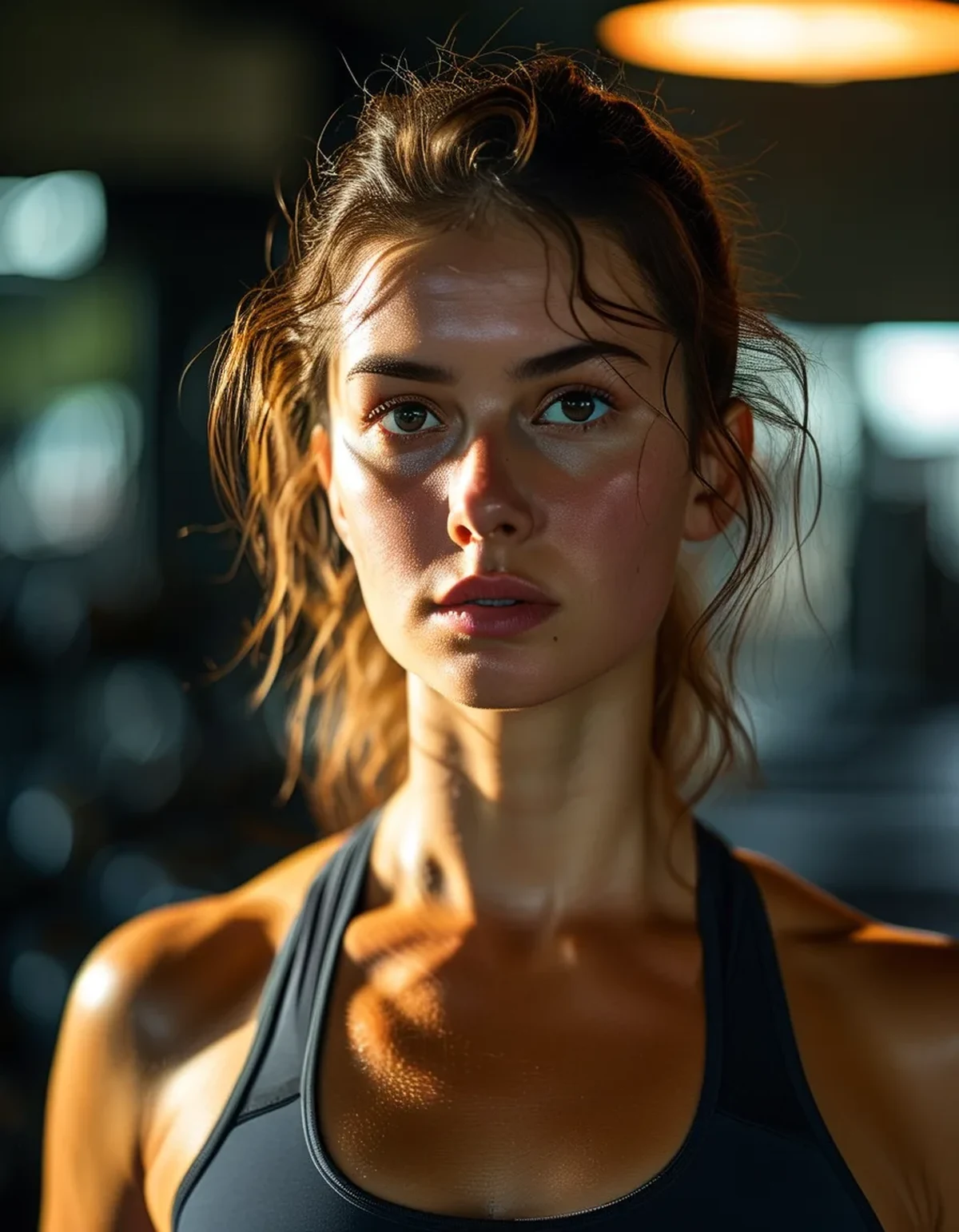
You finished the same session you have done all summer just as wet as you were in July and could not work out why.
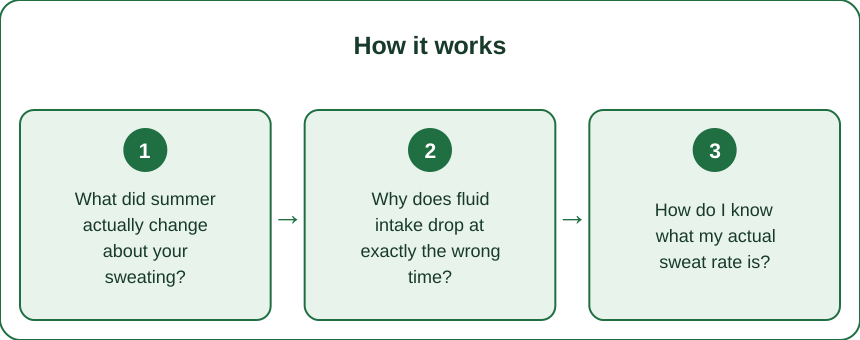
What did summer actually change about your sweating?
Heat acclimatisation produces several well-documented adaptations, including an earlier onset of sweating, a higher sweat rate and more dilute sweat with less sodium loss.
These develop over roughly one to two weeks of repeated heat exposure and are one of the more reliable adaptations in exercise physiology.
Plasma volume also expands, which improves cardiovascular stability in the heat and is one of the faster adaptations to appear.
Your body learned to start cooling sooner, which is precisely why you now sweat readily in conditions that would not have produced it in May.
The adaptations decay when heat exposure stops, but not instantly - decay happens over a similar or slightly longer timescale than acquisition.
So early autumn is a window where you have a summer cooling system operating in autumn conditions.
Why does fluid intake drop at exactly the wrong time?
Thirst is driven by more than fluid loss, and the sensation of being hot is a substantial behavioural prompt to drink that disappears in cool weather.
Cool air makes sweat evaporate faster, so you feel less wet even while losing a similar amount, which removes the visual cue.
People stop carrying water when they stop feeling hot, which is a straightforward behavioural change with a measurable effect.
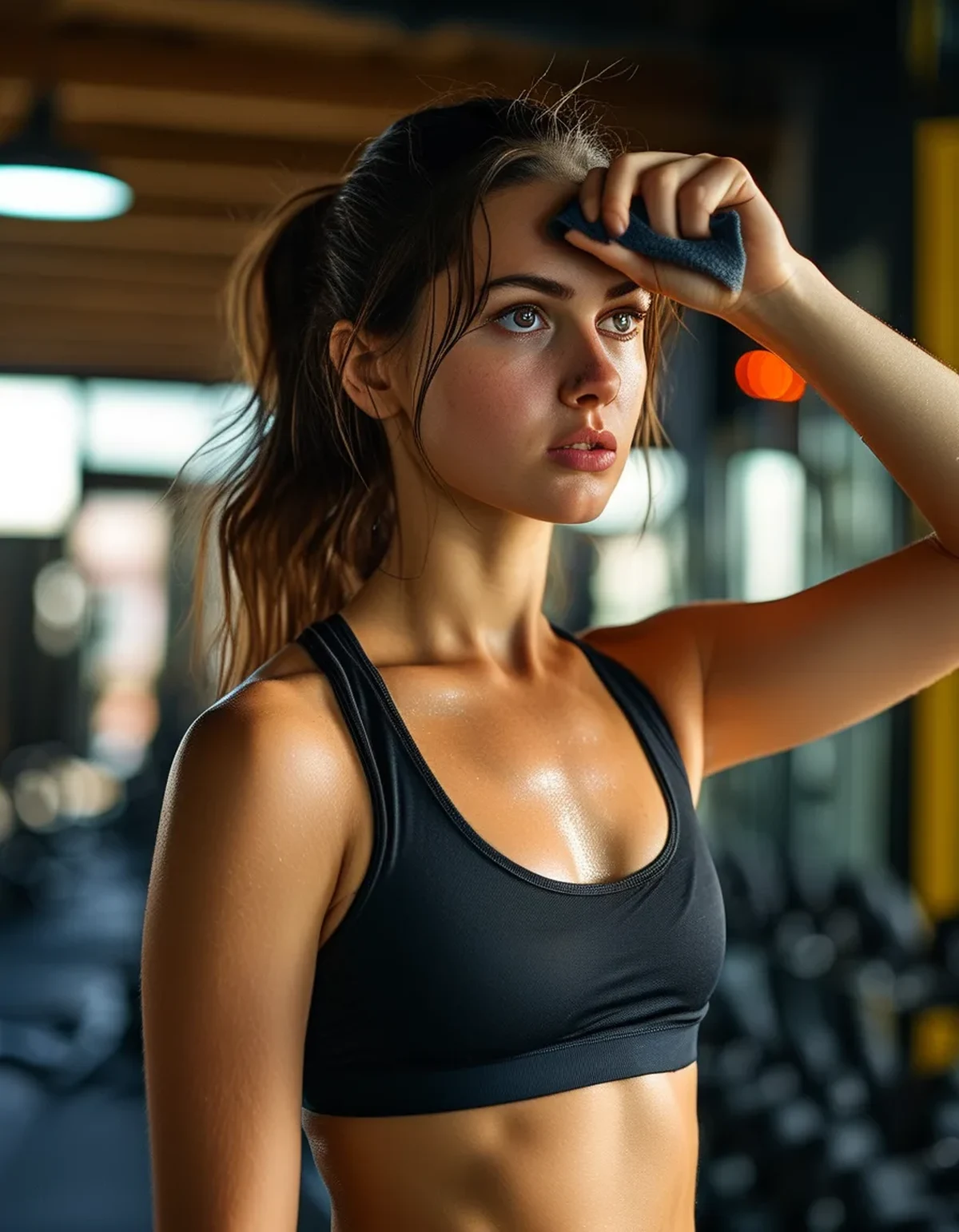
Layers hide the evidence. A long sleeve absorbs what a vest displayed, so the session looks drier than it was.
Cool conditions can also blunt thirst somewhat, which is a recognised phenomenon in cold-weather exercise.
And there is no obvious signal that anything changed, so the drop happens without a decision, in the same way the sweat response persists without one.
How do I know what my actual sweat rate is?
Weigh yourself before and after a session, in minimal clothing, having towelled dry. The weight difference plus any fluid consumed approximates your sweat loss.
One kilogram of weight loss corresponds to roughly one litre of fluid, which makes the arithmetic simple.
Do it two or three times across different conditions, since sweat rate varies enormously between individuals and between sessions.
Compare a cool-gym session with a warm one and you will usually find the difference is smaller than expected in early autumn - which is the whole point.
Repeat it again in late autumn, by which point acclimatisation will have decayed and the number will genuinely be lower.
And use it to set a drinking plan rather than to worry, since the practical output is knowing roughly how much to replace. This is general information, not medical advice.
What should I change in practice?
Keep the summer water bottle habit through September, which is the simplest fix and addresses the main gap.
Drink to a plan rather than to thirst during longer sessions, since thirst is a less reliable prompt in cool conditions.
Dress for fifteen minutes into the session, not for the first minute, which is standard advice and directly reduces unnecessary sweat loss.
Remove a layer before you are hot rather than after, since once you are sweating heavily under a layer you have already lost the fluid.
Watch for the salt on your kit. Visible salt residue after a session suggests meaningful sodium loss, which is worth accounting for if you train long.
And expect it to normalise. By mid to late autumn the acclimatisation has decayed and sweat rate genuinely drops, at which point this stops being a mismatch. This is general information, not medical advice.
Myth vs Fact: Sweat and Temperature
Myth: sweating a lot means you are unfit.
Fact: it is largely the opposite. Trained and heat-acclimatised individuals typically begin sweating sooner and sweat more, because it is an effective cooling response rather than a sign of struggle.
Myth: if you are not visibly wet, you are not losing much fluid.
Fact: in cool dry air sweat evaporates rapidly, which is exactly when it is doing its job. Low visible wetness with high evaporative loss is normal and misleading.
Myth: acclimatisation disappears as soon as the weather turns.
Fact: it decays over a period of roughly one to several weeks depending on the adaptation, which is why early autumn produces this mismatch in the first place.
Myth: sweating more means you need salt supplements.
Fact: it depends on duration, intensity, individual sweat sodium concentration and diet. For most sessions under an hour, normal eating covers it. Ask a qualified professional about longer or unusual demands.
Myth: you should drink as much as possible during exercise.
Fact: over-drinking carries its own risks, and current guidance generally favours replacing losses sensibly rather than maximising intake. Knowing your approximate sweat rate is more useful than a blanket rule. This is general information, not medical advice.
FAQ: Sweat Rate Questions, Answered
How long does heat acclimatisation last after summer?
Decay begins within days of stopping regular heat exposure and continues over roughly one to several weeks, varying by adaptation and by individual.
Why do I sweat more than other people in the same class?
Sweat rate varies substantially between individuals due to body size, fitness, acclimatisation status and genetics. It is not a fitness signal on its own.
Should I drink less in cool weather?
Probably less than in peak summer, but not as much less as your thirst suggests in early autumn, when sweat losses are still elevated. Measuring once tells you more than guessing.
Is the white residue on my kit a problem?
It indicates sodium in your sweat, which varies between people. For longer sessions or heavy sweaters it may be worth discussing with a qualified professional.
Does sweating more mean I burned more calories?
No. Sweat rate reflects thermoregulatory demand and environmental conditions, not energy expenditure. A hot easy session can produce more sweat than a cool hard one.
How do I measure sweat rate at home?
Weigh yourself before and after a session in minimal clothing, add any fluid you drank, and treat one kilogram lost as roughly one litre of fluid.
When should I be concerned?
Dizziness, confusion, cramping that does not resolve, or feeling unwell during or after exercise warrant stopping and seeking advice from a qualified healthcare professional. This is general information, not medical advice.
TL;DR:
- Summer heat acclimatisation raises your sweat rate and does not switch off when the weather cools.
- Early autumn is a mismatch window: summer sweat response, autumn conditions, reduced thirst cue.
- Cool dry air evaporates sweat fast, so you look drier while losing a similar amount.
- Weigh before and after a session to get your actual sweat rate rather than guessing.
- Keep the summer bottle habit through September and dress for fifteen minutes in, not minute one.
Your cooling system is still running on summer settings. This is general information, not medical advice.
Keep Reading
This article is for general informational and styling purposes only. Fit, sizing, and product availability may vary.