The Science of Why You Keep Sweating for 20 Minutes After You've Already Stopped Exercising
Quick Answer: Post-exercise sweating continues because your core body temperature stays elevated for several minutes after you stop moving, and your body’s cooling system (sweat production) responds to that internal temperature, not to whether you’re currently active — it takes time for heat generated during exercise to actually dissipate.
The treadmill’s off, your heart rate’s dropping, and you’re still dripping. That lag is measurable physiology, not poor cardio fitness.

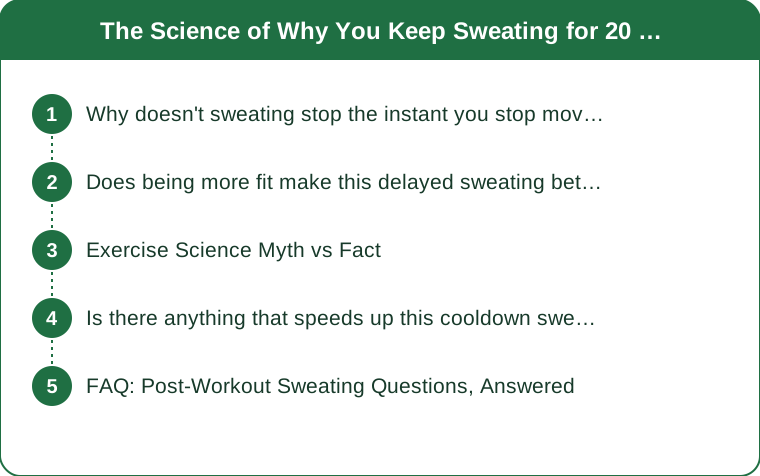
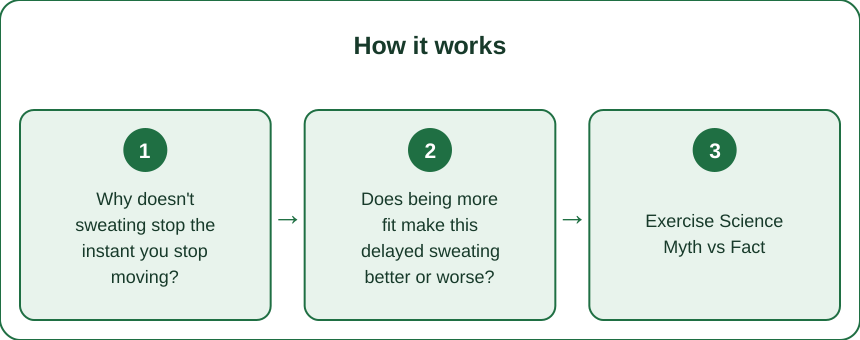
Why doesn’t sweating stop the instant you stop moving?
Because sweat glands respond to core body temperature, which is a slower-moving signal than muscle activity. Exercise generates heat that builds up in your core over the course of the workout, and that stored heat doesn’t disappear the moment you stop — it has to actually dissipate through continued sweating and radiant heat loss.
This delay is typically 10-20 minutes depending on workout intensity, ambient temperature, and individual fitness level.
Does being more fit make this delayed sweating better or worse?
Counterintuitively, well-trained athletes often sweat more, and sometimes for longer, than beginners at the same relative effort — their sweat response is more efficient and triggers earlier and more heavily, because trained bodies have adapted to cool themselves faster and more aggressively.
So heavy post-workout sweating in a fit person isn’t a red flag — it can actually reflect a more responsive cooling system, not a less efficient one.

Exercise Science Myth vs Fact
Myth: Sweating a lot means you’re burning more calories. Fact: Sweat volume reflects heat and cooling efficiency, not calories burned — a hot, humid room makes you sweat more without changing the workout’s calorie cost.
Myth: You should stop drinking water once you stop sweating. Fact: Rehydration needs are based on total fluid lost, which continues accumulating during the cooldown sweat period, not just during active exercise.
Myth: Sweating stops as soon as heart rate returns to resting. Fact: Heart rate and core temperature recover on different timelines — heart rate often normalizes before core temperature fully does.
Is there anything that speeds up this cooldown sweat phase?
Active cooldown methods — a cool (not ice-cold) shower, moving to a cooler ambient environment, or light continued movement to keep circulation aiding heat dissipation — can shorten the window somewhat, since anything that helps dump core heat faster reduces how long the sweat response needs to stay active.
Standing completely still in a warm room tends to extend the sweating phase compared to a gradual, ventilated cooldown.
FAQ: Post-Workout Sweating Questions, Answered
Is it normal to sweat more after a workout than during it?
Yes, especially right after high-intensity intervals — the delayed core-temperature peak can trigger a sweat surge in the first few cooldown minutes.
Should I worry if I don’t sweat much after exercise at all?
Sweat response varies significantly by individual and climate acclimation — if you’re not feeling overheated or dizzy, low post-workout sweat generally isn’t concerning.
Does this delayed sweating waste more water than I realize?
It adds to total fluid loss for the session, which is exactly why rehydration should continue for a while after you stop moving, not just during exercise.
TL;DR:
- Post-workout sweating continues because core temperature, not activity level, drives the sweat response
- The lag is typically 10-20 minutes depending on intensity and heat
- Heavier post-workout sweating in trained individuals can reflect efficient cooling, not poor fitness
- Active, gradual cooldowns in cooler air can shorten the delayed-sweat window
That post-workout drip is your body finishing the cooling job it started mid-set — give it the 20 minutes it needs.
Keep Reading
This article is for general informational and styling purposes only. Fit, sizing, and product availability may vary.