Why You Keep Sweating Long After Your Workout Ends
Quick Answer: Exercise stores heat faster than your body can shed it, so you finish every hard session carrying a surplus — core temperature stays elevated for twenty to sixty minutes afterwards, and your metabolism keeps running above baseline as you recover. Sweat glands stay on until the surplus is gone. In humid late-August air, evaporation is slow, so the same heat debt takes even longer to pay down and the sweat keeps visibly arriving. The fix is managing the cool-down, not scrubbing at the symptom.
Here is what is happening, and how to shorten it.
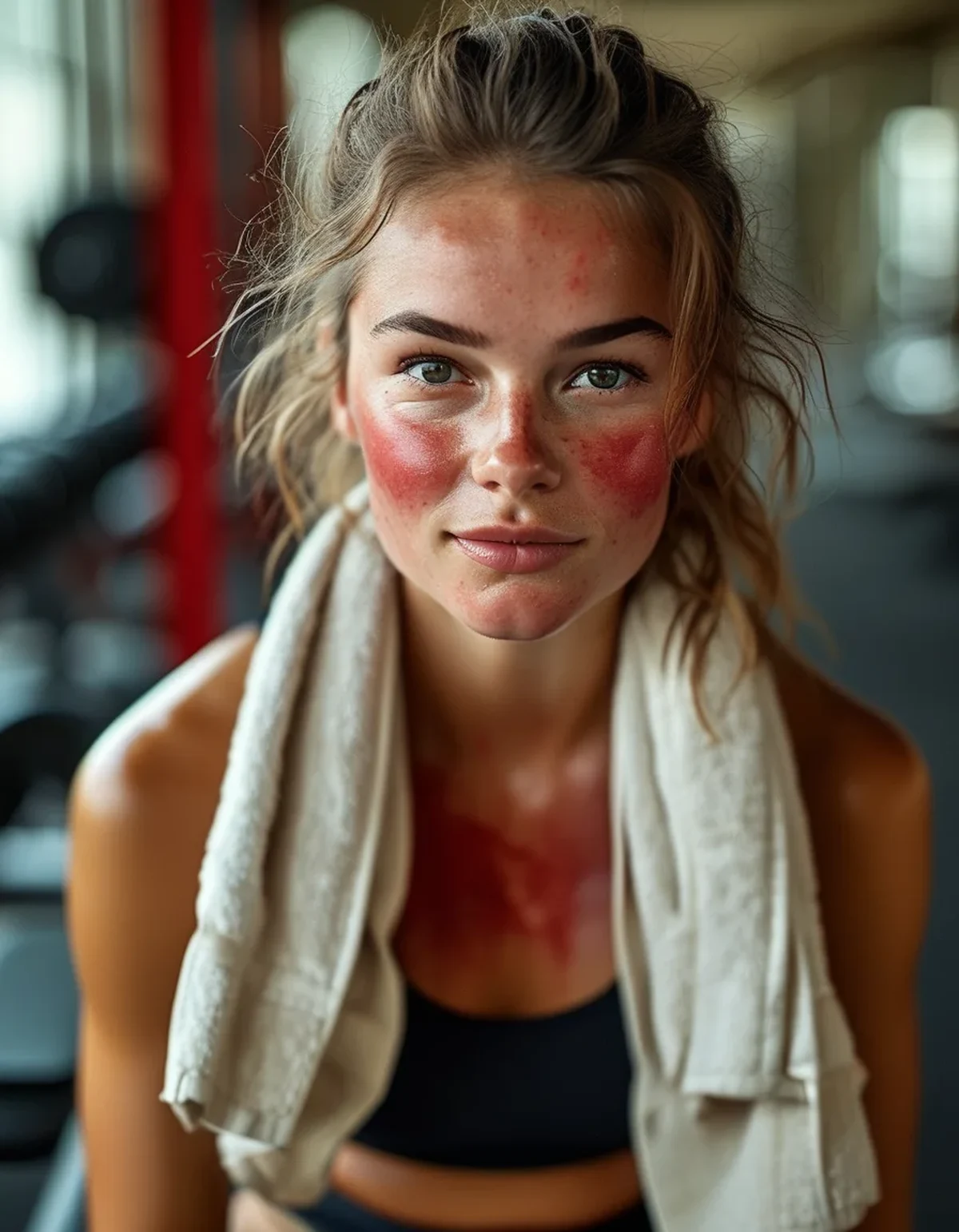
Why does sweat continue when the effort has stopped?
Because sweating tracks core temperature, not movement, and core temperature lags everything.
Working muscle is a furnace. Most of the energy you burn during exercise becomes heat, and during a hard session you generate it faster than sweat and skin blood flow can dump it. The gap accumulates as stored heat — which is why you finish a workout warmer than you started, no matter how much you sweated during it.
Your thermostat responds to that stored heat, not to the fact that you pressed stop. The hypothalamus keeps sweat glands and skin blood vessels working until core temperature actually returns to normal, and that drainage takes twenty to sixty minutes after a meaningful session — longer after long or intense ones.
Your metabolism also stays elevated while you recover. The processes that restore oxygen stores, clear metabolic by-products, and begin repair all consume energy themselves, and that recovery metabolism produces its own gentle heat on top of the stored surplus.
Meanwhile the cooling machinery has momentum. Blood is still routed heavily to the skin — the flush you see in the mirror — and glands that were driven hard respond for a while even as the drive tapers.
So the after-sweat is not a malfunction or a fitness problem. It is the second half of thermoregulation, running exactly as designed. The interesting part is what controls how long it lasts.
What decides how long the after-sweat lasts?
Five factors, two of which you control.
How much heat you banked. Intensity and duration set the size of the debt. Intervals and long sessions store more heat than easy steady work, and the after-sweat scales with it almost linearly.
The air you cool down in. Evaporation is your main exhaust, and it depends on the humidity gap between your skin and the air. In dry air, sweat vanishes and cools you fast; in saturated late-summer air, sweat sits, drips, and cools you barely at all — so the glands keep producing. The same August workout produces a dramatically longer sweat tail than its January twin. Air movement matters nearly as much as humidity: moving air strips the saturated layer sitting against your skin.
Your fitness — in the opposite direction from what most people assume. Trained bodies start sweating sooner and produce more, because an efficient cooling system is an adaptation, not a flaw. Fit people often have a shorter total tail because they dump heat effectively, but the volume can be impressive.
Your size. More body mass stores more heat at the same relative effort, and surface-to-mass ratio governs how fast it leaves.
Hydration. A well-hydrated body sweats freely and cools efficiently; a dehydrated one conserves, cools worse, and holds core temperature high longer — trading less visible sweat now for a longer hot tail overall.
You cannot change your size or fitness by Thursday. You can absolutely change the cool-down environment and the hydration.
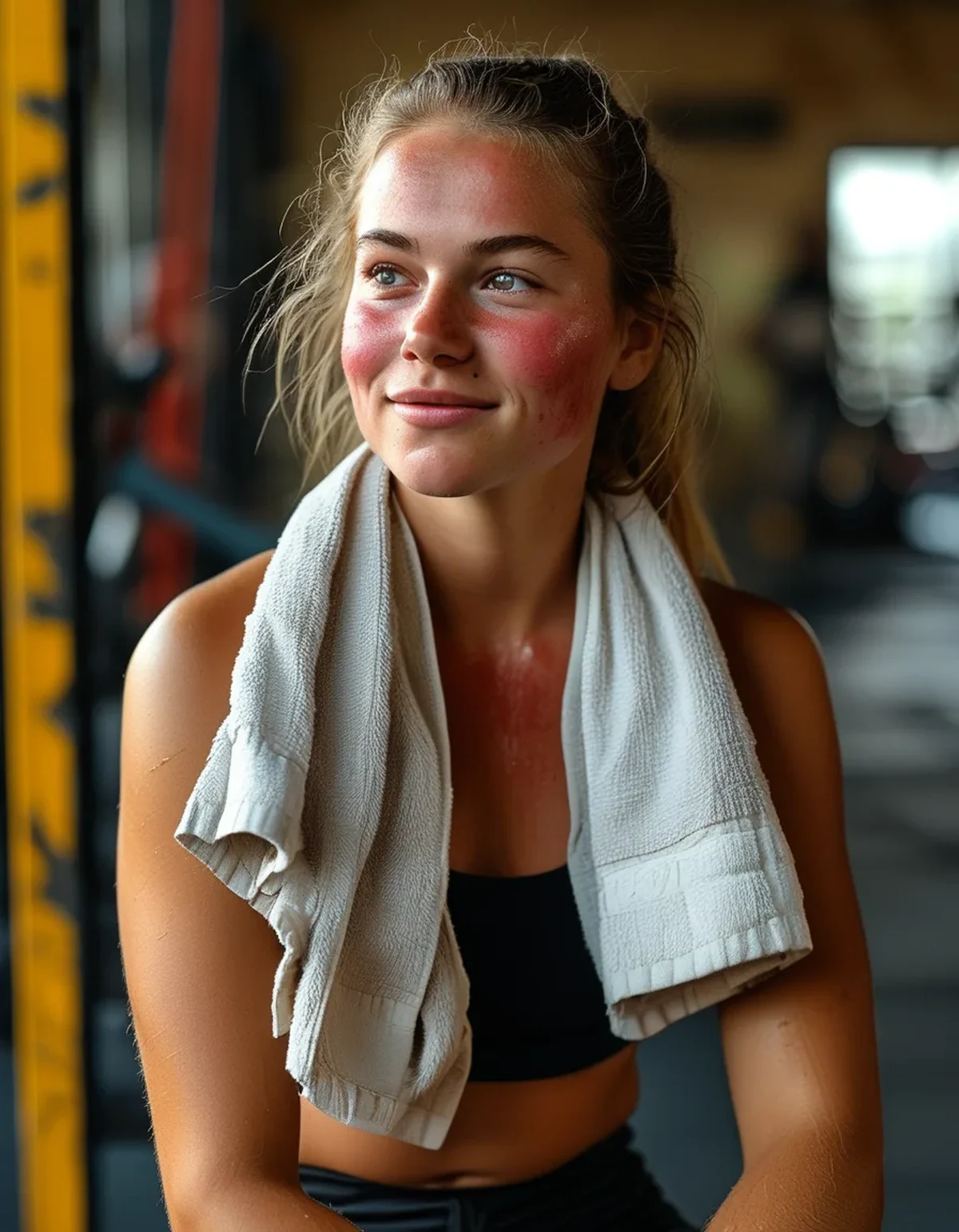
What Nobody Tells You About Post-Workout Sweat
The freezing shower backfires. Blasting cold water feels decisive, but it constricts skin blood vessels — the exact route your stored heat exits through — and can trap the surplus deeper. Many people sweat through fresh clothes ten minutes after an icy shower and blame the shower for not working. Lukewarm-to-cool is the setting that actually removes heat.
Sweating more after workouts is often a sign you got fitter, not less fit. Training turns the cooling system on earlier and harder. The soaked shirt is an upgraded radiator, not a red flag.
The car is a heat trap. Sitting in a sun-baked car immediately after training combines a hot cabin, zero airflow, and a body mid-drainage — the trifecta behind arriving anywhere looking freshly rained on. Two minutes of AC with the doors open before driving changes the whole ride.
Your lunch stacks with your workout. Caffeine before and spicy food after both nudge sweat pathways on their own; on top of an elevated core they extend the tail noticeably.
Antiperspirant applied post-shower to hot skin does little. It needs dry skin and time to form its plugs — which is why night-before application outperforms the morning-of swipe by a wide margin.
The head and hairline drain last. Scalp sweat has nowhere to evaporate under hair, so the face keeps collecting runoff after the body has settled. Blotting the hairline, not the cheeks, is the efficient move.
How do you actually shorten the tail?
Work the exits in order: keep moving, move air, cool water, dry clothes, cool fluids.
End with ten easy minutes instead of a hard stop. A gentle spin or walk keeps blood moving through skin while intensity falls, letting you shed heat during the session instead of after it. Sessions that end abruptly at peak effort produce the longest, sweatiest tails.
Get into moving air immediately. A fan, a breezy doorway, the shaded outdoors — moving air is the single most effective post-workout tool in humid weather because it replaces the saturated air layer on your skin. Standing in front of a fan for five minutes beats sitting in an air-conditioned corner with still air.
Run cool water over forearms and the back of the neck. These are high-flow heat-exchange sites close to the surface; thirty seconds each at a sink pulls real heat out without triggering the cold-shock constriction of an ice-cold shower.
Change everything that is wet. Soaked fabric sits as a warm humid layer that blocks evaporation. Peeling off sweat-soaked leggings and a damp bra for dry ones drops perceived temperature immediately and lets skin actually finish the job — it is the difference between towelling off once and blotting for an hour.
Drink something cool, not iced, and keep it coming. Fluid supports the sweating you still need to do, and the temperature helps modestly from the inside.
Then give it the twenty minutes. Shower at the end of the drainage, not the start, and the shower actually sticks. If a meeting follows training, the buffer is not vanity — it is physiology, and it is why the shower-then-sprint routine fails.
FAQ: After-Sweat Questions, Answered
How long should sweating last after a workout?
Twenty to sixty minutes is the normal window for a meaningful session, scaling with intensity, duration, humidity, and body size. Hot humid days sit at the long end. Sweating that persists hours after every light session, or arrives with dizziness or palpitations, is worth mentioning to a doctor.
Why do I sweat more after the shower than during it?
You showered before the heat debt was paid, and the hot water added to it. Cool the shower slightly, shorten it, and take it fifteen to twenty minutes after finishing, with a fan or moving air afterwards.
Does the after-sweat burn extra calories?
Recovery metabolism is real but modest — a small bonus after hard sessions, not a second workout. Treat it as a sign the session did something, not as a number worth chasing.
I barely sweat after workouts. Is my cooling broken?
More likely your sessions are short or easy, the air is dry and evaporating it invisibly, or you are under-hydrated and conserving. If you also feel overheated, headachy, or stop sweating during hard heat exposure, that is a warning sign — stop, cool, and rehydrate.
TL;DR:
- Exercise stores heat faster than you can shed it, and sweat glands stay on until core temperature drains back down — twenty to sixty minutes is normal.
- Humid late-summer air slows evaporation, so the same heat debt produces a much longer visible sweat tail than in dry weather.
- Fitter bodies sweat sooner and harder by design; the soaked shirt is an efficient radiator, not a problem.
- Shorten the tail in order: ten easy minutes to finish, moving air, cool water on forearms and neck, dry clothes, cool fluids — and shower after the drainage, not before.
Build the twenty-minute buffer into your schedule this week. The after-sweat stops being a problem the moment you stop fighting its timeline.
Keep Reading
This article is for general informational and styling purposes only. Fit, sizing, and product availability may vary.