Why Muscle Soreness Peaking a Day or Two Later Doesn't Mean the Workout Was More Effective
Feeling more sore the day after a workout than immediately after it often gets read as a sign that session was especially effective, but delayed onset muscle soreness reflects a specific and somewhat unpredictable type of microscopic muscle damage — not a reliable scorecard for how good the training actually was.

Why Delayed Onset Muscle Soreness Reflects a Specific Type of Muscle Damage Rather Than Workout Quality
The soreness-mechanism reality: the doms-is-associated-with-microscopic-damage-to-muscle-fibers-particularly-from-eccentric-loading (the the lengthening, controlled portion of a movement being especially linked to this specific soreness pattern — the eccentric-loading-linked-to-doms), the the-the-inflammatory-and-repair-response-that-follows-is-what-actually-produces-the-delayed-sensation-of-soreness (the the soreness itself being a downstream repair-process signal rather than a direct measure of training stimulus — the repair-response-produces-delayed-soreness), the the-a-completely-new-or-unfamiliar-movement-can-produce-significant-doms-even-at-low-intensity (the novelty alone triggering meaningful soreness independent of how hard or effective the session actually was — the novelty-alone-can-trigger-significant-doms), and the reframe (soreness reflecting the type and novelty of movement more than the effectiveness or intensity of the training session as a whole).

The Actual Timeline of What’s Happening in the Muscle During That Window
The actual progression: the microscopic-fiber-damage-occurs-during-the-workout-itself-though-its-not-felt-yet (the the physical damage happening in real time during training, before any soreness sensation appears — the damage-occurs-during-workout-not-felt-yet), the the-inflammatory-response-builds-over-the-following-twenty-four-to-forty-eight-hours (the the body’s repair process ramping up over roughly a day or two, which is when soreness typically peaks — the inflammatory-response-builds-over-24-to-48-hours), the the-soreness-typically-resolves-within-three-to-five-days-as-the-repair-process-completes (the the sensation fading on a fairly predictable schedule as actual tissue repair finishes — the soreness-resolves-in-three-to-five-days), and the frame (damage happening during the workout, soreness peaking a day or two later as inflammation builds, and resolution within roughly three to five days — a timeline driven by repair biology, not training quality).
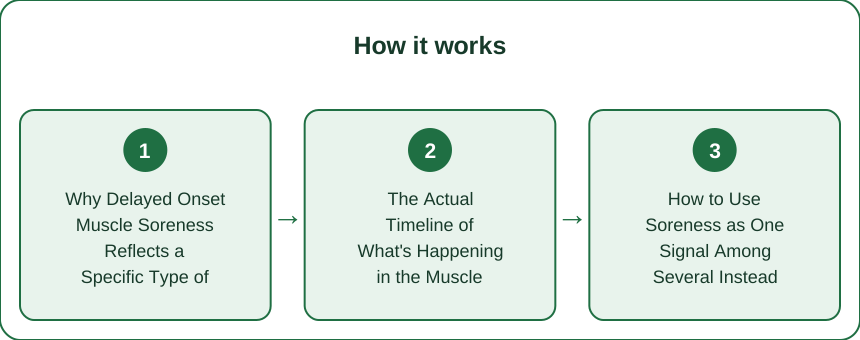
How to Use Soreness as One Signal Among Several Instead of the Main Measure of a Good Workout
The practical reframe: the track-actual-performance-metrics-like-reps-weight-or-pace-as-the-primary-progress-signal (the objective, measurable indicators reflecting training effectiveness more reliably than a subjective soreness feeling — the track-objective-performance-as-primary-signal), the the-use-persistent-or-unusually-severe-soreness-as-a-signal-to-check-recovery-not-as-a-badge-of-a-good-session (the reframing extreme soreness as information about recovery adequacy rather than proof of a great workout — the severe-soreness-signals-check-recovery-not-badge), the the-expect-less-soreness-over-time-with-a-familiar-routine-as-a-sign-of-adaptation-not-decline (the reduced soreness with repeated exposure to the same movement reflecting healthy adaptation rather than a less effective session — the less-soreness-with-familiarity-is-adaptation), and the frame (tracking objective performance as the real signal, treating severe soreness as a recovery check rather than a badge of honor, and expecting soreness to fade with familiarity as a sign of healthy adaptation, not declining effectiveness).
Feeling more sore a day or two after a workout than right after it often gets read as proof that session was especially effective, but delayed onset muscle soreness reflects microscopic muscle fiber damage particularly linked to eccentric, lengthening movement, and the inflammatory repair response that follows — meaning a completely unfamiliar movement can produce significant soreness even at fairly low intensity, independent of how effective the training actually was. The actual timeline has fiber damage occurring during the workout itself, the inflammatory response building over the following twenty-four to forty-eight hours as soreness peaks, and resolution typically within three to five days as repair completes. Use soreness as one signal among several rather than the main measure of a good workout: track objective performance metrics like reps, weight or pace as the real progress signal, treat unusually severe soreness as a cue to check recovery rather than a badge of a great session, and expect soreness to fade with a familiar routine as a sign of healthy adaptation, not declining effectiveness.
Keep Reading
This article is for general informational and styling purposes only. Fit, sizing, and product availability may vary.