DOMS Explained: The Science of Why You're Sore Two Days Later and What Actually Helps
The soreness that peaks two days after a workout has a name, a mechanism and a pile of half-effective remedies — and understanding DOMS turns the day-two hobble from mystery into managed. The DOMS science: the mechanism, the evidence and the literacy.


The Mechanism
What’s actually happening: the microdamage model (the unaccustomed exercise creating microscopic muscle disruption — the repair-and-inflammation cascade producing the soreness; the damage being the adaptation TRIGGER per the adaptation doctrine), the lactic-acid myth burial (the lactate clearing within HOURS — the two-day soreness being unrelated; the gym’s most persistent myth retired per the myths doctrine), the delayed timeline (the 24-72 hour peak — the inflammation-and-sensitization process taking time; the day-two-worse-than-day-one pattern being normal chemistry), the eccentric signature (the lengthening-under-load contractions causing most DOMS — the downhill runs, the lowering phases, the new exercises from the eccentric doctrine; the why-novelty-hurts explanation), the repeated-bout effect (the same workout hurting less the second time — the protective adaptation arriving fast; the soreness fading across weeks of consistency being the designed outcome per the adaptation doctrine), and the soreness-quality honesty (the DOMS being dull, broad and movement-eased — the sharp, joint-line or one-sided pain being NOT DOMS per the pain doctrine).

The What-Helps Evidence
Remedies ranked: the genuinely-helpful tier (the light movement leading — the easy walk-and-cycle that eases symptoms per the active-recovery doctrine; the sleep-and-protein basics funding the actual repair from the recovery doctrine), the modestly-helpful tier (the massage-and-foam-rolling showing small real effects from the rolling doctrine — the heat’s comfort; the compression garments’ modest signals from the compression doctrine), the mostly-comfort tier (the ice baths’ mixed evidence — the soreness eased but the adaptation possibly blunted: the cold-water timing debate; the stretching NOT preventing DOMS per the stretching doctrine — the pleasant-but-not-preventive verdict), the skip-tier (the NSAIDs’ regular use possibly blunting adaptation — the occasional-comfort versus habitual-use distinction per the medication doctrine; the miracle-recovery products from the marketing doctrine), the prevention truth (the gradual progression being the only real prevention — the 10-percent-style ramps from the progression doctrine; the repeated-bout effect earned deliberately: the new program introduced gently), and the time honesty (the DOMS resolving in 3-5 days regardless — the remedies easing the wait, not shortening it much).
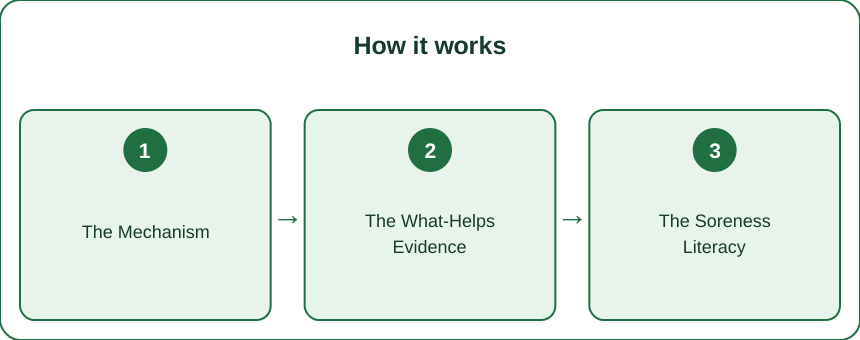
The Soreness Literacy
Reading your soreness: the soreness-as-signal calibration (the DOMS confirming novelty, NOT measuring workout quality — the no-soreness workout still building per the adaptation doctrine; the soreness-chasing being the beginner’s wrong compass per the effort doctrine), the train-through question (the mild DOMS trained through with light-to-moderate work — the warm-up easing it per the warm-up doctrine; the severe DOMS earning the easy day; the same-muscles-hard-again waiting for resolution per the recovery doctrine), the red-flag list (the extreme soreness with dark urine being the rhabdo emergency — the rare-but-real medical tier; the sharp-and-joint pain rerouted per the pain doctrine), the beginner counseling (the first-week soreness being the initiation, not the injury — the it-gets-better promise being physiological fact; the day-two panic prevented by expectation per the beginner doctrine), the planning application (the DOMS-heavy sessions scheduled away from key days — the leg-day-before-the-hike error; the eccentric-heavy novelty timed per the planning doctrine), and the closing frame (the DOMS as the body’s renovation notice — the disruption that precedes the upgrade; the walk, the sleep and the patience being the protocol; the soreness, decoded into information). Peaks day two, eased by walking, prevented only by gradual: the DOMS, demystified.
DOMS is microdamage-and-repair (not lactic acid — that clears in hours), peaking 24-72 hours after novel or eccentric-heavy work. What helps: light movement, sleep and protein; what’s comfort-only: ice, stretching, massage; what prevents: gradual progression and the repeated-bout effect. Soreness confirms novelty — it does NOT measure workout quality.
Keep Reading
This article is for general informational and styling purposes only. Fit, sizing, and product availability may vary.